Whakaaturanga Rangitahi
Temporary Exhibition

Tō Ao ki Tōku Ao: A Meeting of Worlds - Exhibition
Open 28 October 2026 - 20 March 2027
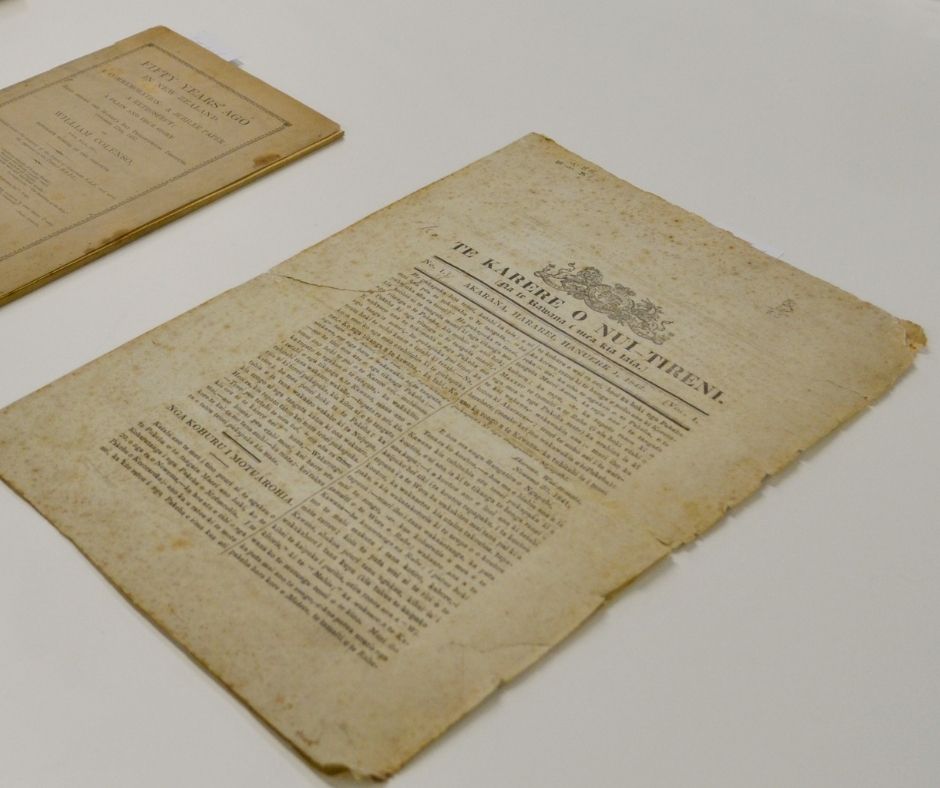
Te Kōngahu Museum of Waitangi Gallery has the honour of exhibitingTō Ao ki Tōku Ao: A Meeting of Worlds. This exhibition, co-curated by Eru Kapa-Kingi, Heperi Mita and MOTAT, The Museum of Transportand Technology, explores the implementation of printing technology in Aotearoa and the profound role the printed page played in the meeting of Te Ao Māori and Te Ao Pākehā.
Exhibition Background
Tō Ao ki Tōku Ao considers the printed page as a place of encounter where Māori language, knowledge, authority and political aspirations entered a new technological medium, creating opportunities for the transmission of ideas on an unprecedented scale.
At the heart of the exhibition is a 1837 second edition print copy of He Whakaputanga o te Rangatiratanga o Nu Tireni 1835, the Declaration of Independence of the United Tribes of New Zealand, alongside a selection of early printed works that reveal the emergence of print as a powerful tool within the changing world of nineteenth-century Aotearoa.
For visitors at Waitangi, Tō Ao ki Tōku Ao offers an opportunity to place these printed works within the broader history of He Whakaputanga 1835, Te Tiriti o Waitangi 1840 and the relationship between Māori and the Crown. This meeting of worlds was not a single event. It was, and continues to be an ongoing process of exchange, adaptation, negotiation and transformation.
Waitangi Treaty Grounds Curatorial Manager OwenTaituha-Mackay says, “what is particularly meaningful to me is seeing these works return to Waitangi. They belong to a period when the lives of Māori andPākehā were coming into increasingly complex contact, and the printed page became one of the places where that encounter played out. To experience these works within the landscape where many of those conversations and political developments unfolded, is a powerful reminder that these are not simply historical documents but are records of Māori engaging with a changing world”.